
A seal turns your name into a signature
The oldest carrier on this site, and the one with the tightest rules. A stone the size of a thumbnail has to hold the whole name, and a character that reads clearly on paper will not necessarily read here.
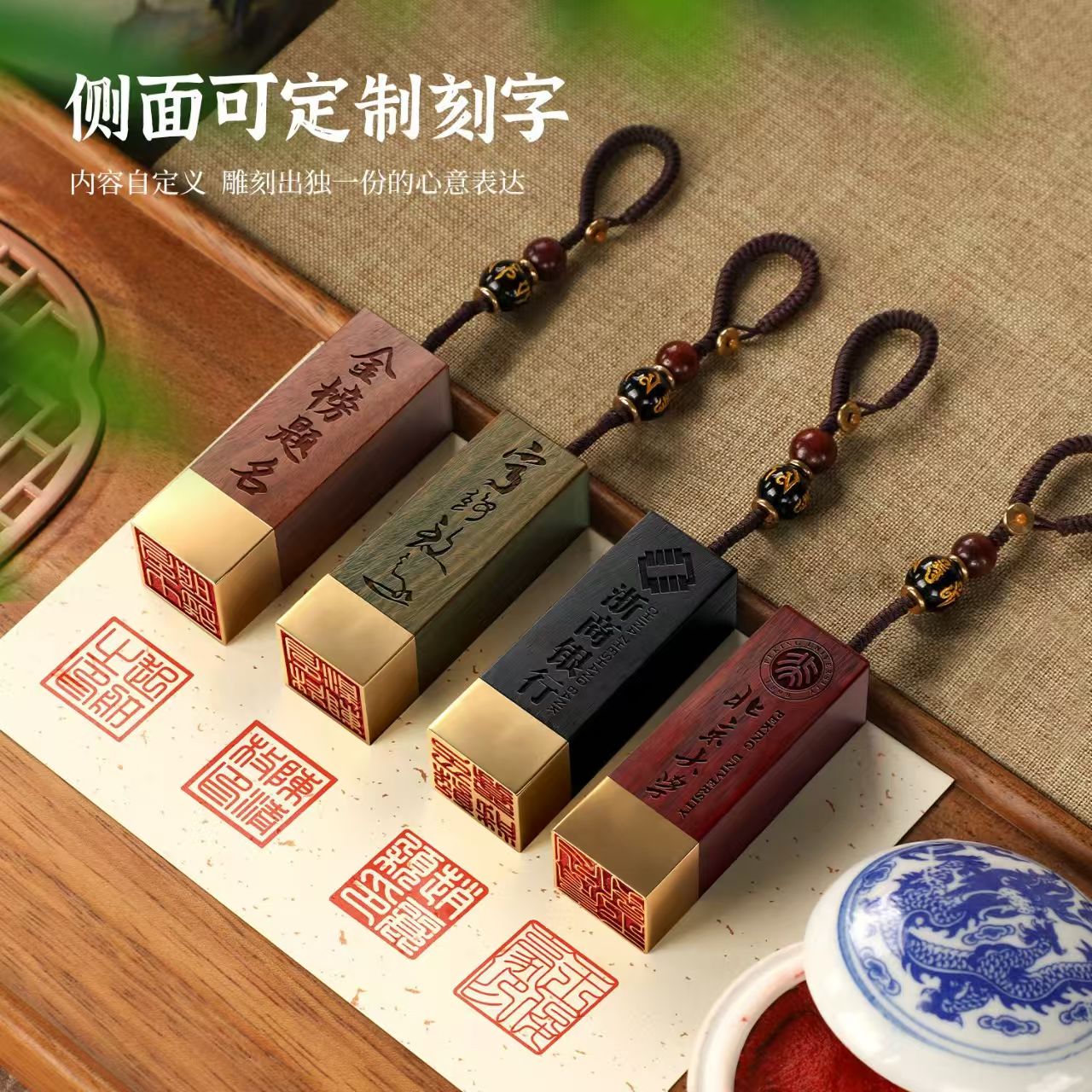
Which characters work here
Two characters at 10 strokes or fewer hold up at 15 mm. That covers much of the library — 明, 安, 宁, 和 — but rules out the showy ones. 曦 at 20 strokes becomes a dense black square once the stone is small; if that is your name, this carrier is asking for a larger stone rather than a different name.
Why it is laid out this way
Why the characters are carved top to bottom: a seal is stamped, not written, and the eye reads the impression the way it reads a column of text. Horizontal carving in a small stone compresses each character sideways, which is the failure mode you see in cheap souvenir seals.
Before you commit
A seal is also the one carrier where your surname matters more than usual: three characters carved three strokes deep in a small stone have to be laid out before anything is cut.
Ask about this piece
Tell us which carrier, which name, and what you have in mind. The button opens a pre-filled email in your own mail app — nothing is submitted from this page.
Cut it yourself
Not every order starts from a name we generated. Type your own characters, leave the face bare, or send a picture to be pressed in as a seal mark. The preview is drawn at the carrier’s real engraving position, at the size it will be cut.
Up to 1–2 characters here, set vertical the way the sample on the drawing is. Long names are set smaller rather than run off the object.
The object ships with nothing cut into it. Some buyers want the bare stone, the blank scroll or the plain cup and have it cut at home; that is a real order and it costs the same.
A picture is not printed onto the surface. It is reduced to one colour and cut in that shape, the way a seal prints. Line drawings, monograms and hard silhouettes survive; photographs lose their detail, and the preview shows exactly what survives.
A drawing, not a photograph of the finished piece. Colour and grain vary with the material.